
Why businesses use custom short links?
Businesses constantly look for simple ways to make their marketing, communication, and online presence more professional and effective. One small tool that can make a surprisingly big difference is a short, branded web address. Instead of sharing a long, complicated URL filled with random letters, numbers, tracking parameters, and website paths, businesses can create a shorter and more recognizable link that is easier for people to read, remember, and trust.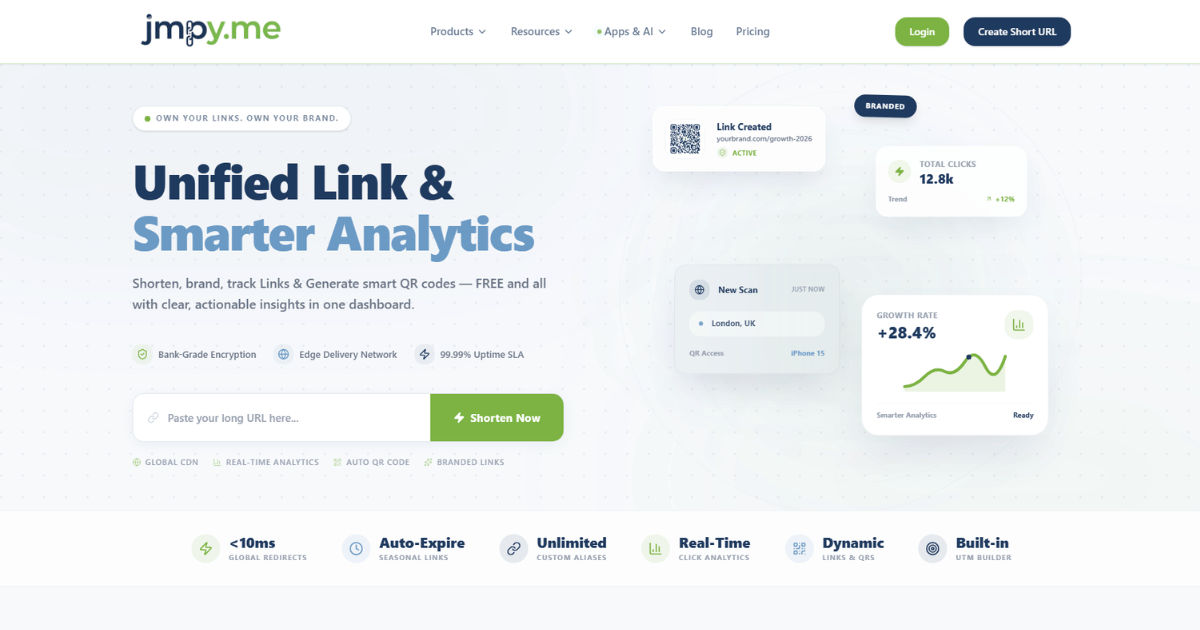
Custom short links are especially useful because they combine the convenience of a shortened URL with the identity of a business or brand. They can be used in social media posts, advertisements, emails, printed materials, presentations, SMS campaigns, product packaging, and many other places. More importantly, they can help businesses track how people interact with their links and understand which marketing efforts are producing results.
For a small business, an online store, a marketing agency, or a large international company, the value of a link is not limited to simply taking someone from one page to another. A well-designed link can communicate trust, reinforce brand recognition, improve campaign measurement, and make digital marketing easier to manage.
This is why many businesses choose custom short links instead of relying only on long, ordinary URLs.
What Are Custom Short Links?
A custom short link is a shortened web address that uses a recognizable or branded domain and, in many cases, a meaningful keyword or phrase.
For example, imagine a business has a very long product page URL that contains multiple folders and tracking codes. Sharing that entire address in an advertisement may look messy and difficult to remember. A business can instead create a shorter link that is easier to understand and share.
The important difference between a regular shortened URL and a branded short link is the level of customization and identity involved.
A generic URL shortener might create a link containing a random combination of characters. While that link may work perfectly well, users may not immediately know where it leads.
A custom link can include a business's brand name, campaign name, product name, or another recognizable word. This makes the link more meaningful.
For example, a business running a summer promotion might use a short link that clearly reflects the campaign. The exact structure will depend on the company's domain and URL strategy, but the basic idea is that the destination remains long and complex behind the scenes while the public-facing link stays short and recognizable.
When someone clicks the link, they are redirected to the intended destination.
This makes short links a practical bridge between a complicated web address and a clean customer-facing experience.
Why Do Businesses Need Shorter Links?
Modern websites often have complex URL structures.
A single webpage may contain a long path, category information, product identifiers, referral parameters, and analytics tracking codes. These details can be useful for the website and marketing team, but they are not always attractive or convenient for customers.
A long URL can be difficult to copy, type, read, or remember.
It can also become problematic in places where space is limited. Social media posts, text messages, printed advertisements, and promotional materials all benefit from concise communication.
A shorter link solves this problem.
However, businesses often want more than just a shorter URL. They want the link to support their brand and marketing goals. This is where custom short links become valuable.
Instead of presenting customers with an unfamiliar shortened address, a company can create a link that feels connected to its identity.
The result is a link that is shorter without necessarily losing the sense of professionalism and brand recognition that businesses want to maintain.
They Strengthen Brand Recognition
One of the biggest reasons companies use custom short links is branding.
Every interaction a customer has with a business can contribute to brand recognition. Logos, colors, packaging, advertisements, social media profiles, emails, and website addresses all play a role.
Links can be part of that same branding strategy.
When customers repeatedly see a recognizable brand name inside a link, the name becomes more familiar. Even before clicking, users may have an idea of where the link is coming from.
This is particularly useful for companies that invest heavily in digital marketing.
Imagine a customer sees a company name in a social media advertisement, then sees the same name in an email link, and later encounters it on a printed flyer. Consistent branding across these different touchpoints can make the business feel more established and recognizable.
A custom short link may look like a small detail, but repeated exposure to a consistent brand identity can contribute to a stronger overall presence.
They Make Links Easier to Remember
Long URLs are rarely memorable.
If a customer sees a complicated web address containing multiple words, symbols, numbers, and tracking parameters, they are unlikely to remember it later.
A shorter, meaningful link is easier to recall.
This can be particularly useful in offline marketing. A business might print a short link on a billboard, brochure, business card, poster, product package, or event display.
Customers can potentially remember a simple link and visit it later.
This is much more practical than asking people to remember a long web address with a complicated structure.
The easier a link is to remember, the more useful it becomes as a bridge between offline and online marketing.
They Look More Professional
Presentation matters in business.
A long URL can sometimes make a marketing message appear cluttered or unfinished. This is especially noticeable when the link contains technical parameters that have no meaning to the average customer.
A clean short link creates a more polished appearance.
Businesses want customers to feel confident when interacting with their marketing materials. A recognizable link can contribute to that sense of professionalism.
This does not mean that a short link automatically makes a business trustworthy. Trust comes from many factors, including the company's reputation, website security, customer service, and overall experience.
However, a clean and recognizable link can support a professional presentation.
They Improve Link Sharing
Businesses share links across many channels.
Marketing teams may distribute links through social media, email newsletters, messaging platforms, advertisements, customer support conversations, and internal communications.
Short links are easier to share across these channels.
They take up less space and are easier to copy and paste. This is especially helpful in messages where character limits or visual simplicity matter.
For example, a social media campaign may need to include a promotional message, an image, a call to action, and a link. A shorter link leaves more room for the actual message.
In SMS marketing, shorter links can also help keep communications concise.
The same principle applies to business presentations and documents. A short link is easier to include without distracting from the main content.
They Help Businesses Track Marketing Campaigns
One of the most important benefits of custom short links is tracking.
Businesses need to know whether their marketing campaigns are working.
It is not enough to publish an advertisement and hope that customers respond. Companies want measurable information about how people interact with their campaigns.
Depending on the short-link platform and setup, businesses may be able to monitor information such as the number of clicks, approximate geographic regions, referring sources, devices, and timing.
This data can help marketers understand customer behavior.
For example, a company may promote the same product on several platforms. Each campaign can use a different short link that directs users to the same destination.
The marketing team can then compare the results.
If one campaign produces significantly more clicks than another, the company has useful information about where its audience is responding.
This can help businesses make better decisions about future marketing investments.
They Make Campaign Performance Easier to Measure
Marketing performance is often about comparison.
A company may run an advertising campaign on social media, send an email newsletter, publish a blog article, and distribute printed flyers.
Without proper tracking, it may be difficult to determine which channels are generating the most traffic.
Custom short links can help solve this problem.
A business can create unique links for different campaigns or marketing channels. Although each link may lead to the same landing page, the tracking information can identify the source of the visitor.
This creates a clearer picture of campaign performance.
For example, a business could use one link for an email campaign and another for a social media campaign. If the email link generates significantly more traffic, the company may decide to invest more effort into email marketing.
This type of information is valuable because it replaces assumptions with measurable data.
They Support Better Marketing Decisions
Data is useful only when businesses use it to make decisions.
Tracking link activity can help marketers understand which campaigns attract attention and which ones are less effective.
A business may discover that customers respond strongly to links shared through email but rarely click links from a particular social platform.
Another company might find that a specific promotional message generates more engagement than a general advertisement.
These insights can influence future decisions.
Marketing teams can adjust their content, timing, audience targeting, and promotional strategies based on actual results.
In this way, custom short links can become part of a broader marketing measurement system.
They are not a complete analytics solution by themselves, but they can provide valuable information about link-level engagement.
They Are Useful for Social Media Marketing
Social media is one of the most common environments for short links.
Businesses frequently use links to send users to product pages, landing pages, blog posts, registration forms, event pages, and promotional offers.
Long URLs can make social media posts look cluttered.
Short links create a cleaner appearance and make the call to action easier to identify.
They can also make it easier for businesses to maintain consistency across different platforms.
A company promoting the same campaign on multiple social networks can create an organized link structure and track the performance of each channel.
This helps marketing teams understand which platforms are producing meaningful traffic.
They Work Well in Email Marketing
Email campaigns often contain several links.
A business may send newsletters, promotional offers, product announcements, event invitations, or customer updates.
Short links can help keep these communications visually clean.
They are also useful for tracking campaign activity.
A business can monitor which links attract clicks and determine whether subscribers are engaging with specific offers.
This information can help marketers improve future emails.
For example, if subscribers frequently click product links but rarely interact with general company announcements, the business can adjust its email strategy accordingly.
The goal is not simply to generate more clicks. It is to understand what customers find useful and relevant.
They Are Helpful in Printed Marketing
At first, digital links might seem unrelated to printed advertising.
However, businesses often use short links to connect physical marketing materials with digital experiences.
A short link can be printed on a brochure, poster, flyer, business card, product package, or event banner.
A customer can type the address into a browser or use it alongside a QR code.
The advantage is simplicity.
A long URL is difficult to type manually from a printed advertisement. A short link is much more practical.
This can be particularly valuable when a company wants customers to visit a special campaign page, download a resource, register for an event, or access a promotional offer.
They Can Support QR Code Campaigns
QR codes have become common in business marketing.
Restaurants, retailers, event organizers, property companies, and many other businesses use QR codes to connect physical experiences with online content.
A QR code can point directly to a long URL, but businesses may also use a short-link system as the destination.
This can provide an additional layer of flexibility.
Instead of permanently connecting a printed QR code to one specific page, a business may configure the short link behind the QR code to redirect users to different destinations over time, depending on the capabilities of the platform being used.
This can be useful for campaigns that change frequently.
For example, a printed advertisement may remain in circulation for months while the business updates the online promotion associated with it.
The physical marketing material does not necessarily need to be redesigned every time the destination changes.
They Can Make Campaigns Easier to Manage
Businesses often run multiple campaigns at the same time.
A marketing department may be promoting different products, services, events, seasonal offers, and content pieces.
Managing all the associated URLs can become difficult.
A structured short-link system can make campaign organization easier.
Marketing teams can create links based on campaign names, channels, or promotional periods.
This gives teams a clearer way to identify which link belongs to which campaign.
Good organization becomes especially important as a business grows.
A small company may manage only a few links, while a larger organization may manage hundreds or thousands.
Without a clear system, links can become difficult to track and maintain.
They Can Be Updated More Easily
One useful feature offered by some short-link services is the ability to change the destination associated with a link.
This means the public-facing short link can remain the same while the destination page changes.
This can be helpful when a business uses a link in a long-term campaign.
For example, a company might print a short link on packaging or promotional materials. Later, the company may want to send visitors to a new campaign page.
If the link management system supports destination editing, the business may be able to update the destination without changing the printed short link.
This can save time and reduce the need to replace existing promotional materials.
However, businesses should choose their short-link provider carefully because not every service offers the same features or long-term reliability.
They Can Improve Customer Experience
Customer experience is influenced by many small details.
A customer who receives a clean, understandable link may find it easier to decide what to do next.
A well-designed short link can also communicate context.
If the visible link contains a recognizable brand or campaign name, users may have more confidence about where they are being directed.
This is especially important when businesses share links through unfamiliar communication channels.
However, businesses should avoid misleading link structures.
The visible link should accurately represent the destination and brand behind it. Transparency is essential for maintaining customer trust.
They Can Help With Offline-to-Online Marketing
Many businesses still rely on offline marketing.
Billboards, brochures, packaging, trade shows, business cards, posters, and direct mail remain useful in many industries.
The challenge is connecting these offline activities with digital measurement.
Short links provide one possible solution.
A business can create a unique link for a particular offline campaign and monitor the traffic generated through that link.
This can help estimate whether the campaign is producing online engagement.
For example, a company might distribute flyers in several locations and use different short links for each area.
The resulting data may help the business compare the response from different locations.
This creates a stronger connection between traditional advertising and digital analytics.
They Can Support Different Marketing Channels
A single business may communicate with customers through many channels.
These can include:
-
Social media
-
Email
-
SMS
-
Websites
-
Printed advertisements
-
Packaging
-
Events
-
Presentations
-
Customer support
-
Online advertising
Each channel may require a slightly different approach.
Custom short links can provide a consistent method for managing links across these environments.
They can also help businesses separate campaigns and measure performance by channel.
This is especially valuable for organizations that want to understand the complete customer journey.
They Can Improve Internal Communication
Short links are not only useful for customer-facing marketing.
Businesses can also use them internally.
Employees may need to share links to internal resources, training materials, documents, forms, or company systems.
A short link can make frequently used resources easier to communicate.
For example, instead of sending employees a long URL to an internal training page, a company may provide a short and memorable address.
This can be particularly useful during presentations, meetings, or training sessions.
However, sensitive internal resources should be protected with proper authentication and security controls. A short link should never be treated as a security mechanism by itself.
They Can Help Organize Large Marketing Operations
Large companies often have complex marketing structures.
Different teams may manage different products, regions, campaigns, and customer groups.
Without organization, link management can become confusing.
A structured approach to short links can help create consistency.
Businesses can establish naming conventions for campaigns and create clear ownership rules.
For example, a marketing team may organize links according to product, campaign, region, or channel.
The exact system will depend on the organization, but the principle is simple: links should be easy to identify and manage.
This becomes increasingly important as the number of campaigns grows.
They Can Be Useful for A/B Testing
Some businesses use short links as part of testing strategies.
A company may want to compare two promotional messages, two marketing channels, or two campaign designs.
Separate links can help distinguish traffic from different versions of a campaign.
For example, two advertisements may lead to the same landing page but use different links. The business can then compare click activity.
This does not replace a complete A/B testing system, especially when measuring conversions or user behavior beyond the click.
However, link-level data can still provide useful information about initial engagement.
They Can Help Reduce Link Clutter
Long links can contain information that is useful for tracking but visually distracting.
A marketing URL might include multiple parameters that make it difficult for customers to understand.
A short link can hide this technical complexity while still directing users to the correct destination.
This creates a cleaner public-facing experience.
The important point is that short links should simplify the customer experience without sacrificing the business's ability to measure performance.
Are Custom Short Links Always Better?
Not necessarily.
Like any digital marketing tool, short links have advantages and limitations.
A business should consider whether using them makes sense for a particular situation.
For example, some users may be cautious about clicking shortened links because they cannot immediately see the final destination.
This is one reason branded short links can be preferable to completely generic shortened URLs.
The brand identity provides more context.
Businesses should also consider the reliability of the service they use. If a short-link provider experiences downtime or shuts down, links may stop working.
For long-term campaigns, companies should think carefully about link ownership, domain control, data access, and service reliability.
What Should Businesses Look for in a Short-Link Platform?
Businesses should evaluate several factors before choosing a platform.
The first is branding.
The service should ideally allow the business to use a recognizable domain or branded link structure.
Analytics are another important consideration.
Businesses should understand what data the platform provides and whether that information is sufficient for their marketing goals.
Security is also essential.
The platform should have appropriate protections against abuse, malicious redirects, and unauthorized account access.
Businesses should also consider link management features.
Depending on their needs, they may want the ability to edit destinations, organize links, manage users, and control access.
Finally, businesses should consider long-term reliability.
A short link may appear simple, but if it is printed on packaging or included in a long-term marketing campaign, it can become an important business asset.
What Are the Risks of Using Short Links?
Short links can introduce certain risks.
One concern is trust.
Users cannot always see the final destination immediately, particularly when the link uses a generic domain.
This can make some people hesitant to click.
Another concern is link management.
If a business loses access to its short-link account or domain, previously published links could become unavailable.
Security is also important.
A compromised account could potentially allow someone to change a link's destination.
Businesses should protect short-link accounts with strong passwords, multi-factor authentication, and appropriate access controls.
They should also regularly review their active links.
How Businesses Can Use Custom Short Links Effectively
The best approach is to treat short links as part of a broader digital strategy.
Businesses should use clear naming conventions.
Links should be easy for internal teams to understand and manage.
Companies should also create separate links when they need to measure different campaigns.
Tracking should be used for a clear purpose rather than simply collecting large amounts of data.
Businesses should regularly review analytics and connect link activity with meaningful outcomes.
A click is useful information, but it is not always the final goal.
The real objective may be a purchase, registration, inquiry, download, booking, or another action.
Therefore, short-link data should ideally be considered alongside broader analytics.
Custom Short Links and Brand Trust
Trust is one of the most important factors in online communication.
People are more likely to interact with links when they understand where those links come from.
A branded short link can provide additional context.
For an established company, seeing the company's recognizable name in a link can reinforce familiarity.
For a new business, it can help create a consistent identity across different channels.
However, branding alone is not enough.
Businesses must make sure their links lead to legitimate and secure destinations.
They should also avoid misleading customers through deceptive link names.
The goal should be to create clarity, not confusion.
Why Small Businesses Can Benefit Too
Short-link strategies are not limited to large corporations.
Small businesses can also benefit.
A local service provider may use short links in social media posts.
An online store may use them in promotional campaigns.
A consultant may use them in presentations.
A restaurant may use them on printed menus or promotional cards.
A small business often has limited marketing resources, which makes measurement especially important.
When every marketing activity matters, knowing where customers are coming from can help businesses spend their time and money more effectively.
A simple link-tracking strategy can therefore provide useful insights without requiring a large marketing department.
The Future of Short Links in Business Marketing
As digital marketing continues to evolve, businesses will likely continue looking for ways to make online interactions simpler and more measurable.
Short links fit naturally into this environment.
They connect branding, marketing, analytics, and customer experience in a relatively simple format.
However, their role is likely to evolve alongside new technologies.
Businesses may increasingly connect short links with QR codes, automated campaigns, personalized landing pages, customer relationship management systems, and advanced analytics.
The fundamental purpose will remain the same: creating a simple path between the customer and the intended online destination while helping the business understand engagement.
Conclusion
Businesses use custom short links because they solve several practical problems at once.
- They make long URLs shorter and easier to share.
- They can reinforce brand recognition and create a more professional appearance.
- They can make links easier to remember, especially when used in offline marketing.
- They can also provide valuable tracking information that helps businesses understand where their traffic comes from and how campaigns perform.
For marketing teams, this measurement can be especially important. Instead of simply publishing a campaign and waiting for results, businesses can use link data to gain insight into customer engagement.
Short links can also support social media campaigns, email marketing, SMS communication, printed advertising, QR codes, events, and internal communication.
- However, businesses should not assume that every short link is automatically beneficial.
- The quality of the implementation matters.
A reliable platform, a recognizable brand domain, proper security, sensible naming conventions, and thoughtful analytics practices are all important.
Businesses should also remember that clicks are only one part of the customer journey. The ultimate goal is usually not to generate clicks but to encourage meaningful actions that support business objectives.
When used properly, custom short links become more than a way to shorten URLs. They become a practical marketing and communication tool that can improve presentation, simplify sharing, strengthen branding, and provide useful campaign insights.