
Where should logos go on a custom football uniform?
A football uniform is more than clothing worn during a game. It represents a team’s identity, builds recognition, and creates a professional appearance on the field. When designing a custom football uniform, one of the most important decisions is deciding where each logo should be placed. The right position can make a logo highly visible without making the uniform look crowded.
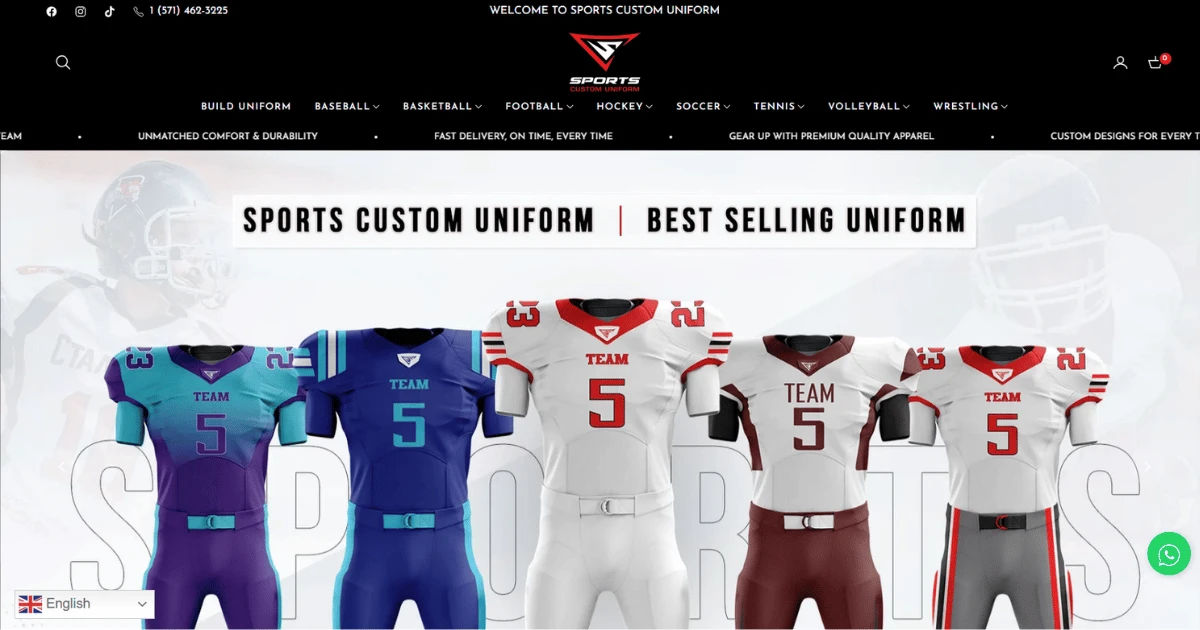
Logo placement involves more than choosing an attractive location. Teams need to think about visibility, balance, player movement, uniform rules, printing methods, and the size of each design. A well-planned uniform allows the team name, primary logo, sponsor information, and player number to work together naturally.
For a custom football uniform, the third paragraph is a useful reminder that logo placement should support the overall design rather than compete with essential information such as player numbers. Every logo should have a clear purpose and a position where it can be seen easily.
Why Logo Placement Matters
A football team can have an excellent logo, but poor placement can reduce its impact. A logo positioned too close to another design may become difficult to recognize. A logo that is too small may disappear from a distance, while an oversized logo can overwhelm the uniform.
Good placement creates visual balance. The front, back, sleeves, and other areas of the uniform should work together. This is particularly important when a team has several visual elements, including a crest, sponsor logo, player number, team name, and league patch.
Logo placement also affects how uniforms appear in photographs and videos. Football games are often recorded from different angles, so important branding should not be limited to one location.
The Best Places for a Team Logo
Left Chest
The left chest is one of the most traditional locations for a football team logo. It is close to the heart and has a strong connection with team identity and pride.
A medium-sized crest or emblem works particularly well in this position. It is visible when players are standing, walking, or participating in interviews.
For many teams, the left chest becomes the primary logo location. If the team has a detailed emblem, keeping it here at an appropriate size can give the uniform a classic and professional appearance.
Center Chest
The center chest provides excellent visibility, especially when the design is intended to make a strong visual statement. However, this area needs to be planned carefully because it usually competes with the player's front number.
If the team wants a large logo across the chest, the number may need to be positioned below or integrated into the design. The goal is to prevent the logo from reducing the readability of the number.
A center-chest logo can be especially effective for practice jerseys, fan shirts, and alternate uniforms.
Right Chest
The right chest is another useful location, particularly for sponsor branding. Many teams place their primary crest on the left and a sponsor or secondary emblem on the right.
This creates symmetry and allows both designs to remain visible without competing for the same space.
When designing a custom football uniform, teams should consider whether the right chest will be used for sponsorship now or in the future. Leaving adequate space can make later branding changes easier.
Sleeve Logo Placement
Sleeves offer valuable branding space without interfering heavily with player numbers. A small team emblem, sponsor logo, league patch, or flag can work well on the upper sleeve.
Sleeve logos are particularly useful when the front of the uniform already contains several important elements.
A sleeve logo should remain large enough to recognize but small enough to maintain a clean appearance. Designers should also remember that sleeves move constantly during play. A complicated logo may become harder to recognize when the fabric folds.
For this reason, simple graphics often perform better on sleeves than highly detailed designs.
Shoulder Logo Placement
The shoulder is another popular location for football branding. It can create a distinctive appearance, especially when the team wants its identity to be visible from multiple angles.
Shoulder logos can also complement numbers placed on the sleeves or upper torso. However, the available space may vary depending on the uniform's cut.
When creating a custom football uniform, the design should be tested on an actual uniform template rather than viewed only as a flat logo file. A position that looks perfect on a computer screen may look different when applied to curved and moving fabric.
Back Logo Placement
The back of a football jersey is primarily reserved for the player's name and number. Because these elements are essential for identification, large logos should not interfere with them.
A small logo can sometimes be placed below the collar or above the player's name. This location provides additional branding while keeping the number highly visible.
Some teams also use the lower back area for sponsor branding. If this approach is used, the logo should be positioned carefully so it does not look disconnected from the rest of the design.
The back can be particularly valuable for sponsors because cameras often capture players from behind during games.
Collar and Neck Logos
The collar provides a small but effective area for subtle branding. Teams may place a small emblem, initials, motto, or manufacturer mark near the neckline.
This location works best for simple designs. A detailed logo may not reproduce clearly because the available space is limited.
A collar logo can also give a custom football uniform a premium appearance because it adds branding without taking attention away from the main design.
Sponsor Logo Placement
Sponsors are an important consideration for many football teams. Their logos need to be visible while still maintaining the team's identity.
The chest, sleeves, and lower front are common sponsor locations. The best option depends on the size and number of sponsors.
If there is one primary sponsor, the center chest can provide excellent visibility. If multiple sponsors are involved, smaller logos can be distributed across the sleeves, chest, and lower sections.
However, teams should avoid placing too many sponsor logos on one area. A uniform can quickly become visually crowded.
A strong custom football uniform design gives the team's identity priority while incorporating sponsorship in a structured way.
Balancing the Team Logo and Player Number
The player number is one of the most important visual elements on a football uniform. It must remain easy to read from the sidelines, stands, and broadcast cameras.
For this reason, the primary logo should never overpower the number.
If the number is located on the front, the team logo can be positioned on the upper left or right chest. This arrangement creates separation between branding and identification.
The same principle applies to the back. The player's name and number should receive priority, while smaller branding can be placed around them.
Logo Size and Proportion
Placement alone cannot guarantee a professional appearance. Size is equally important.
A logo should be large enough to be recognized but not so large that it dominates the uniform. The appropriate size depends on the location.
For example, a chest crest may be medium-sized, while a sleeve logo is usually smaller. A large sponsor mark might require more space than a team emblem.
Designers should examine the complete uniform rather than judging individual logos separately. A logo can look appropriately sized on its own but become oversized when combined with numbers, stripes, and other graphics.
Consider the Uniform Color
Logo placement and color should be considered together. A logo needs sufficient contrast against the fabric to remain visible.
For example, a dark logo on a dark jersey may disappear from a distance. Similarly, a very bright logo can look distracting if the rest of the uniform has a subtle design.
Teams should prepare logo versions that work with different uniform colors. This is especially important if the team has home and away kits.
A professional custom football uniform may use the same logo in different color treatments while keeping its overall identity consistent.
Think About Player Movement
Football players run, tackle, block, jump, and change direction constantly. Uniform fabric stretches and folds during these movements.
A logo positioned across a highly flexible area may become distorted. This is one reason chest and upper-sleeve areas are often preferred for important branding.
Designers should consider how the logo will appear while the player is moving, not just while standing still.
The printing or application technique also matters. Embroidery, screen printing, heat transfer, and sublimation can produce different results depending on the fabric and location.
Home and Away Uniforms
Many football teams have multiple uniform designs. A home jersey may use one primary color, while the away jersey uses a contrasting color.
The logo placement should remain consistent between these designs whenever possible. Consistency helps supporters recognize the team regardless of which kit is being worn.
Color variations can be introduced without changing the fundamental position of the branding.
A well-designed custom football uniform collection should feel like one unified system rather than several unrelated jerseys.
Adding Secondary Logos
Some teams have secondary logos, mascots, initials, or special symbols. These can add personality, but they should be used carefully.
A secondary logo might work on the sleeve, shoulder, collar, or lower section of the jersey.
The primary team logo should remain the most recognizable mark. Secondary designs should support it rather than compete with it.
Teams can also use secondary logos on alternate uniforms, training kits, or special-event jerseys.
League and Competition Patches
Competition patches may be required by a league or tournament. These patches often have specific placement requirements.
Before finalizing a custom football uniform, teams should check the rules of their league or governing organization. Requirements may cover logo size, sponsor placement, player numbers, patches, and other uniform elements.
Following these rules is important because a visually attractive design may still need changes before it can be used in official competition.
Common Logo Placement Mistakes
One common mistake is putting too many logos on the front. When the chest contains several sponsor marks, a large team crest, a number, and additional graphics, everything can compete for attention.
Another mistake is placing logos too close to seams. Seams can interfere with printing and may distort the design.
Using inconsistent logo sizes is also problematic. If one sleeve contains a very large logo while another has a tiny mark, the uniform may appear unbalanced.
Teams should also avoid extremely detailed designs in very small locations. Fine details may disappear during production.
Finally, never assume that a logo will look exactly the same on every fabric. A physical sample or digital uniform mockup can help identify problems before a large order is produced.
How to Create a Balanced Logo Layout
Start by identifying the most important elements. Usually, these include the team logo and player number.
Next, determine whether sponsor logos or competition patches are required. Assign each element a specific location before beginning the final artwork.
Create a visual hierarchy. The primary team identity should usually be more prominent than secondary branding.
Then examine the uniform from the front, back, and sides. Check whether the design feels balanced from every angle.
A useful custom football uniform layout might include the primary crest on the left chest, a sponsor logo on the right chest, the player number in the center, a small patch on the sleeve, and subtle branding near the collar.
This is only a starting point. Every team has different requirements, so the final arrangement should reflect its identity and competition rules.
Should the Logo Be on Both Sides?
Not necessarily. Repeating the same logo on both sides can make a uniform feel crowded.
However, using complementary designs on opposite sides can create symmetry. For example, the team crest could appear on the left chest while a sponsor logo occupies the right.
This approach gives both sides a purpose without unnecessarily repeating the same branding.
If the logo is especially important to the team, it may be repeated in a smaller form on another part of the jersey.
Logos on Football Shorts
Although the jersey receives most of the attention, football shorts also offer branding opportunities.
A small team logo can be placed on the front of one leg. This provides a clean and traditional appearance.
Sponsor logos can also be used on shorts, depending on league regulations and available space.
The design should match the jersey so that the entire custom football uniform appears coordinated.
Logos on Socks and Accessories
Some teams extend branding to socks, warm-up tops, jackets, and training equipment.
Socks have limited space, so simple logos or team initials work best. Warm-up apparel provides more freedom and can feature larger designs.
Using consistent branding across these items strengthens the team's overall identity.
However, not every item needs to carry every logo. Selective branding usually looks more professional than placing the same design everywhere.
Working With a Uniform Designer
A professional uniform designer can help transform a logo placement idea into a practical design.
Provide the designer with high-quality logo files and explain which elements are most important. Vector formats are often useful because they allow artwork to be scaled without losing quality.
Ask for a complete mockup before approving production. Review the front, back, sleeves, and shorts.
It is also helpful to confirm the final logo dimensions and placement with the manufacturer. Production limitations can affect what is possible.
Final Checklist Before Production
Before ordering a custom football uniform, review the entire design carefully.
Check that the primary logo is correctly positioned and proportioned. Confirm that player numbers are clear and have enough contrast.
Make sure sponsor logos are readable without overwhelming the team branding. Verify that competition patches are placed according to applicable rules.
Check the spelling of team names and player names. Confirm that all colors match the team's official branding.
Finally, inspect the design at both full size and reduced size. If the important elements remain clear at a distance, the layout is likely working well.
Conclusion
Logo placement is one of the details that can turn an ordinary football jersey into a professional team uniform. The best locations are not necessarily the areas with the most available space. Instead, they are the locations that provide strong visibility while maintaining a clear visual hierarchy.
The left chest remains one of the strongest choices for a primary team crest because it is traditional, recognizable, and naturally associated with team identity. The right chest can provide an effective location for a sponsor, while sleeves and shoulders are useful for secondary branding and patches.
The back should generally prioritize the player's name and number. Small branding near the collar or lower back can add additional identity without interfering with these essential elements.
Size, contrast, fabric movement, production technique, and league regulations should also influence the final decision. A logo that looks impressive on a computer screen may not work well when printed on moving fabric.
The goal of a custom football uniform is to create a design that looks strong from every angle while communicating who the team is. Every logo should have a purpose, every element should have enough space, and the most important information should remain easy to recognize.
When these principles are followed, logo placement becomes more than decoration. It becomes part of the team's visual identity. A carefully planned uniform can help players feel connected, give supporters something recognizable to wear, and present the team with a confident and professional appearance every time it takes the field.