
How do metal roofing contractors install roofs?
A metal roof can look simple from the ground, but installing one correctly involves much more than fastening metal panels to a roof deck. The process includes inspection, measurements, preparation, underlayment, flashing, panel placement, fastening, and detailed finishing work. Every stage affects the roof's durability and resistance to leaks. 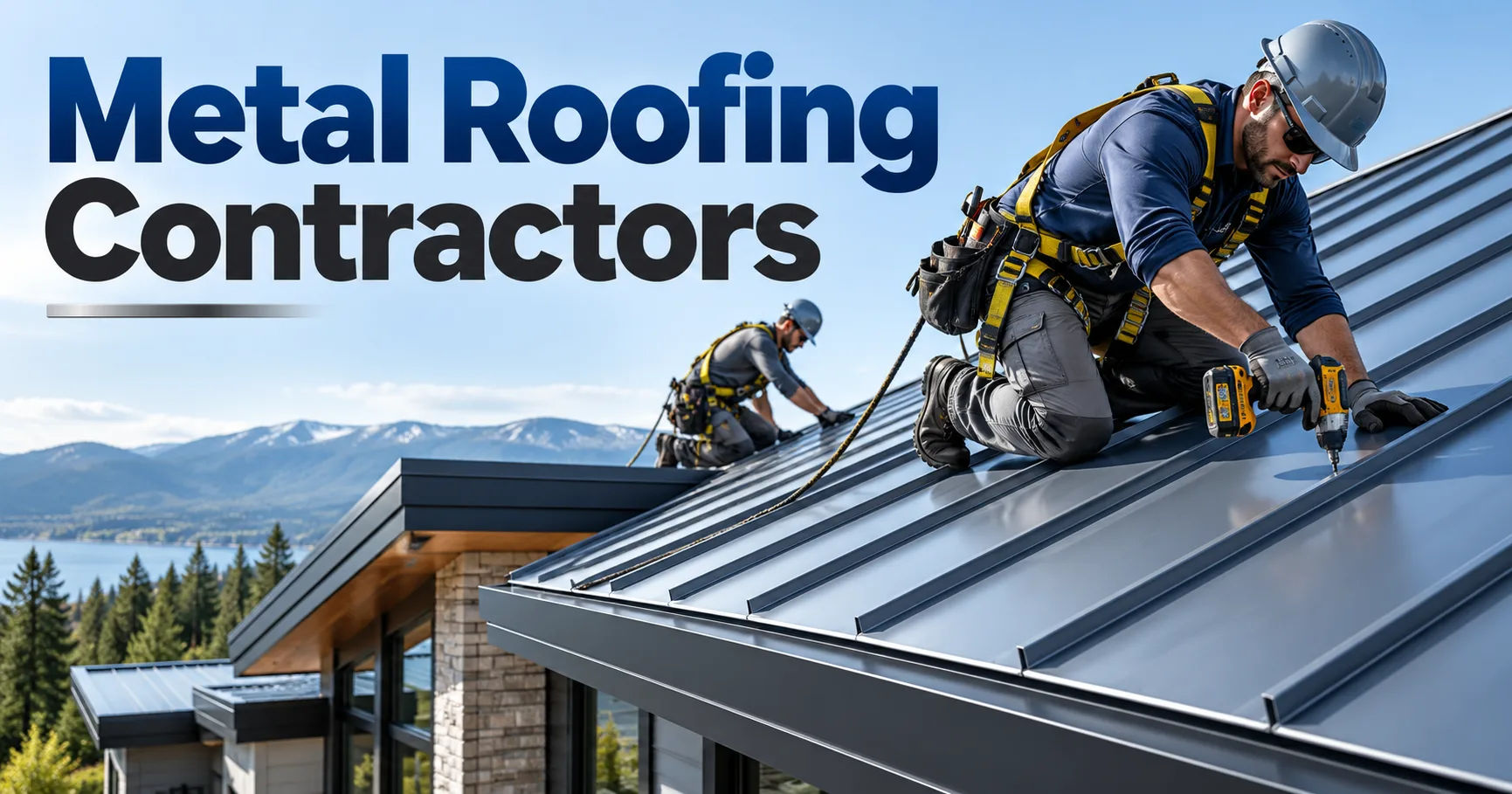 Metal roofing contractors typically begin by evaluating the existing roof structure and determining which installation method and metal roofing system are appropriate.
The roof's slope, condition, dimensions, drainage, and local weather conditions all influence the work. A properly planned installation can help the finished roof perform reliably for many years.
Understanding how professional installation works can help homeowners know what to expect, identify poor workmanship, and ask useful questions before a roofing project begins. The exact process varies depending on whether the project uses standing-seam panels, exposed-fastener panels, metal shingles, or another roofing system, but the major stages are similar.
Initial Roof Inspection and Planning
Before installation begins, the roofing team examines the existing roof and supporting structure.
This inspection helps identify problems that could affect the new roof. Damaged decking, moisture intrusion, weak framing, deteriorated flashing, and poor drainage should be addressed before new materials cover them.
The contractor also examines the roof's pitch. Metal roofing can be suitable for many different slopes, but each roofing product has installation requirements that need to be followed.
Measurements are taken carefully because metal panels must be ordered or cut according to the roof's actual dimensions.
Checking the Roof Structure
A metal roof may be relatively lightweight, but the roof still needs an appropriate structural base.
The installer checks areas such as rafters, trusses, roof decking, and existing supports. If the decking has rot or significant deterioration, sections may need to be replaced.
Installing new panels over damaged structural materials can hide problems instead of solving them.
Measuring the Roof
Accurate measurements help determine the amount of metal panels, trim, flashing, underlayment, fasteners, and other materials required.
The installer measures roof planes, ridges, valleys, hips, eaves, rakes, penetrations, and other features.
Measurements also help reduce unnecessary waste and ensure panels are cut to appropriate lengths.
Removing the Existing Roofing
Depending on the project, the old roofing may be removed before the metal system is installed.
Some metal roofing systems can be installed over an existing roof under specific conditions. However, this is not automatically appropriate for every property.
Removing the old roof allows the installer to inspect the roof deck directly. It can also make it easier to correct hidden damage.
Protecting the Property During Removal
Roof removal can create considerable debris.
Professional crews normally protect landscaping, windows, siding, driveways, and other nearby areas. Debris is collected throughout the process rather than being left scattered around the property.
Safety procedures are also important because roofing involves working at significant heights.
Preparing the Roof Deck
Once the old roofing has been removed, the roof deck becomes the foundation for the new system.
The deck should be relatively clean, dry, and structurally sound.
Damaged plywood or other decking materials are replaced where necessary. The surface is then prepared so that underlayment and metal roofing components can be installed properly.
This stage is easy to overlook because most of the deck will eventually be hidden. Nevertheless, problems here can affect the entire roofing system.
Installing the Underlayment
Underlayment provides an additional protective layer beneath the metal roofing.
Depending on the roofing system and local requirements, installers may use synthetic underlayment, high-temperature materials, self-adhering membranes, or other approved products.
The underlayment helps manage moisture that may get beneath the metal panels because of wind-driven rain, condensation, or other conditions.
Ice and Water Protection
In climates where ice dams are a concern, specialized membrane protection may be installed in vulnerable areas.
These areas can include eaves, valleys, roof-to-wall transitions, and locations around penetrations.
The exact requirements depend on the climate, building code, and roofing manufacturer's instructions.
Installing Eave and Edge Components
Before the main panels go on, installers generally install various trim components.
Eave trim helps direct water into the gutter system and creates a finished edge.
Rake trim is installed along the sloped edges of the roof. Ridge components are used at the top where opposing roof slopes meet.
These pieces are not merely decorative. Correctly installed trim helps control water and wind while protecting exposed edges of the roofing system.
Installing Valley Flashing
Roof valleys require particular attention because they collect water from two roof surfaces.
Depending on the roofing design, a contractor may install metal valley flashing or another approved valley system beneath or around the roofing panels.
The goal is to provide a controlled path for water to move toward the eaves.
Poor valley installation can create opportunities for water intrusion, so experienced installers carefully follow the roofing manufacturer's details.
Installing Metal Roofing Panels
After preparation and flashing are complete, the main metal panels can be installed.
The installation method depends heavily on the type of metal roof being used.
Standing-seam systems generally use concealed clips or other fastening methods that allow panels to accommodate normal thermal movement.
Exposed-fastener systems typically have fasteners installed through designated areas of the panels.
Aligning the First Panel
The first panel is especially important.
If it is installed incorrectly, the error can continue across the entire roof.
Installers carefully position the first panel according to the manufacturer's layout requirements. They check the overhang, alignment, orientation, and relationship to the roof edge.
Once the starting point is correct, subsequent panels can be positioned more consistently.
Securing the Panels
Fasteners must be installed according to the roofing system's specifications.
Overtightening can damage panels, distort washers, or interfere with the intended movement of the metal. Under-tightening can leave the connection insufficiently secure.
The spacing and type of fasteners also matter.
Professional installation therefore involves more than simply driving screws into the metal. The installer needs to understand where and how each connection should be made.
Managing Thermal Movement
Metal expands when heated and contracts when cooled.
This movement is a normal characteristic of metal roofing and must be considered during installation.
Standing-seam systems often incorporate clips and seams designed to accommodate movement. Other systems use fastening patterns and panel details appropriate for their design.
If a roofing system is installed without allowing for expected movement, the panels or fasteners may experience unnecessary stress.
Installing Roof Penetrations
Most roofs have features that interrupt the panels.
These may include plumbing vents, chimneys, skylights, exhaust vents, satellite equipment, or other penetrations.
Each penetration needs appropriate flashing.
Vent and Pipe Flashing
Pipe boots and flashing components are fitted around plumbing vents to create a water-resistant transition.
The metal panels are cut carefully around the penetration, and the flashing is installed according to the roofing system's requirements.
This is one of the areas where precision matters. A small opening or poorly sealed transition can eventually become a source of leakage.
Chimneys and Skylights
Chimneys and skylights require more complex flashing arrangements.
The installer needs to account for water flowing around the structure rather than simply sealing the perimeter with a large amount of sealant.
Good flashing directs water away from vulnerable joints.
Installing Ridge and Vent Components
At the highest point of many roofs, ridge components complete the roofing system.
If the roof uses ridge ventilation, the installer may incorporate a compatible ventilation product beneath the ridge cap.
Proper ventilation helps manage heat and moisture within the attic or roof assembly.
The ridge cap is then installed over the ridge according to the roofing manufacturer's specifications.
Sealing and Finishing Details
Sealants are useful in certain roofing applications, but they should not be treated as a substitute for proper design and flashing.
Installers may use approved sealants around specific joints, penetrations, closures, or flashing details.
The product needs to be compatible with the roofing material and intended application.
Cutting Metal Panels
Metal panels sometimes need to be cut around valleys, penetrations, corners, or other obstacles.
Cuts should be clean and appropriate for the roofing material.
Careless cutting can damage protective coatings or leave openings that are difficult to seal properly.
Installers also need to avoid creating conditions that encourage premature corrosion.
Inspecting the Completed Roof
Installation does not end when the last panel is fastened.
The completed roof should be inspected carefully.
The crew checks panel alignment, fasteners, seams, flashing, trim, penetrations, valleys, ridge areas, and edges.
They may also remove metal scraps, protective film, packaging, and other construction debris.
Checking for Installation Problems
A final inspection can identify issues such as loose fasteners, damaged panels, improperly positioned trim, missing closures, or incomplete flashing.
Addressing these problems before the crew leaves is much easier than discovering them months later.
The contractor should also explain any maintenance requirements and provide information about warranties where applicable.
How Long Does Metal Roof Installation Take?
The installation period varies considerably.
A small, straightforward roof may be completed relatively quickly, while a large or complicated roof can require substantially more time.
Factors include roof size, number of roof planes, pitch, weather, accessibility, existing roof condition, material availability, and the type of metal roofing system.
A roof with multiple valleys, dormers, skylights, chimneys, and other details generally requires more labor than a simple rectangular roof.
Weather can also interrupt installation. Strong winds, heavy rain, or unsafe conditions may require the crew to pause work.
What Makes Professional Installation Different?
The materials themselves are only one part of a roofing project.
The installation details determine how those materials perform together.
Professional metal roofing contractors generally work from the roofing manufacturer's specifications and applicable building requirements. They understand how panels, fasteners, flashing, underlayment, trim, and ventilation interact as a complete system.
Experienced installers also know that different roofs present different challenges.
A simple roof may have straightforward panel runs. Another property may have complicated transitions that require careful planning and custom flashing.
Attention to Water Management
Water management is one of the most important principles in roofing.
The goal is not simply to make every joint watertight with sealant. Instead, the roof should be designed and installed so water naturally moves over the surface and toward the drainage system.
Flashing, laps, seams, valleys, and penetrations all contribute to that process.
Attention to Safety
Roof installation involves fall hazards, sharp metal edges, heavy materials, ladders, and changing weather conditions.
Professional crews use appropriate safety practices and equipment.
Keeping workers safe is important, but it also protects the property owner from unnecessary risks during the project.
Common Installation Mistakes to Watch For
Homeowners can benefit from knowing what poor workmanship may look like.
One common issue is inconsistent fastening. Screws that are visibly tilted, excessively tight, loose, or incorrectly positioned may indicate installation problems.
Another concern is inadequate flashing around penetrations.
Poor panel alignment can also affect the appearance and potentially the performance of the roof.
Improperly installed trim may leave exposed edges or create drainage problems.
Using incompatible materials or sealants can create additional problems over time.
These issues demonstrate why selecting an installer should involve more than comparing the initial price.
Questions to Ask Before Hiring a Roofing Contractor
Before approving the project, homeowners can ask which metal roofing system will be installed and which manufacturer provides the materials.
It is also useful to ask how the existing roof deck will be inspected and how damaged decking will be handled.
Ask whether the contractor follows the manufacturer's installation instructions and applicable local requirements.
Questions about flashing, underlayment, ventilation, warranties, cleanup, and project scheduling can also clarify what is included.
A written estimate should explain the major materials and scope of work rather than leaving important details unclear.
Maintenance After Installation
A properly installed metal roof still benefits from periodic inspection.
Leaves, branches, dirt, and other debris should not be allowed to accumulate in drainage areas.
Gutters and downspouts should remain clear so water can leave the roof efficiently.
After severe weather, it can be useful to inspect the roof for visible damage.
Homeowners should avoid making unnecessary modifications to the panels because drilling or cutting metal can create new penetration points.
If equipment such as solar panels or antennas needs to be installed later, the work should account for the existing roofing system and its waterproofing details.
Conclusion
Installing a metal roof is a carefully coordinated process that starts well before the first panel reaches the roof. The installer must evaluate the structure, measure the roof, prepare the deck, install appropriate underlayment, establish effective flashing, position the panels correctly, secure them according to the system requirements, and complete the edges, penetrations, valleys, and ridge.
The details matter because a metal roof functions as a complete system rather than a collection of individual panels. Good installation manages water, wind, thermal movement, drainage, and ventilation while maintaining a clean finished appearance.
For homeowners, understanding the process makes it easier to evaluate estimates and communicate with metal roofing contractors. Instead of focusing only on the color or price of the panels, it is worth asking about the roof deck, underlayment, flashing, fasteners, ventilation, manufacturer requirements, and final inspection.
A well-installed metal roof should look orderly, shed water effectively, and have properly finished transitions and edges. Careful preparation and precise installation are what turn roofing materials into a dependable roofing system.